Windows Phone is dead, but Microsoft isn’t getting out of mobile—in fact it’s redoubling its efforts. With plenty of apps for iOS and Android out now and improving fast, you can recreate much of the feel of a Windows Phone on your existing handset, as long as you can live without those rotating tiles. Here’s how to go all-in with Microsoft on mobile.
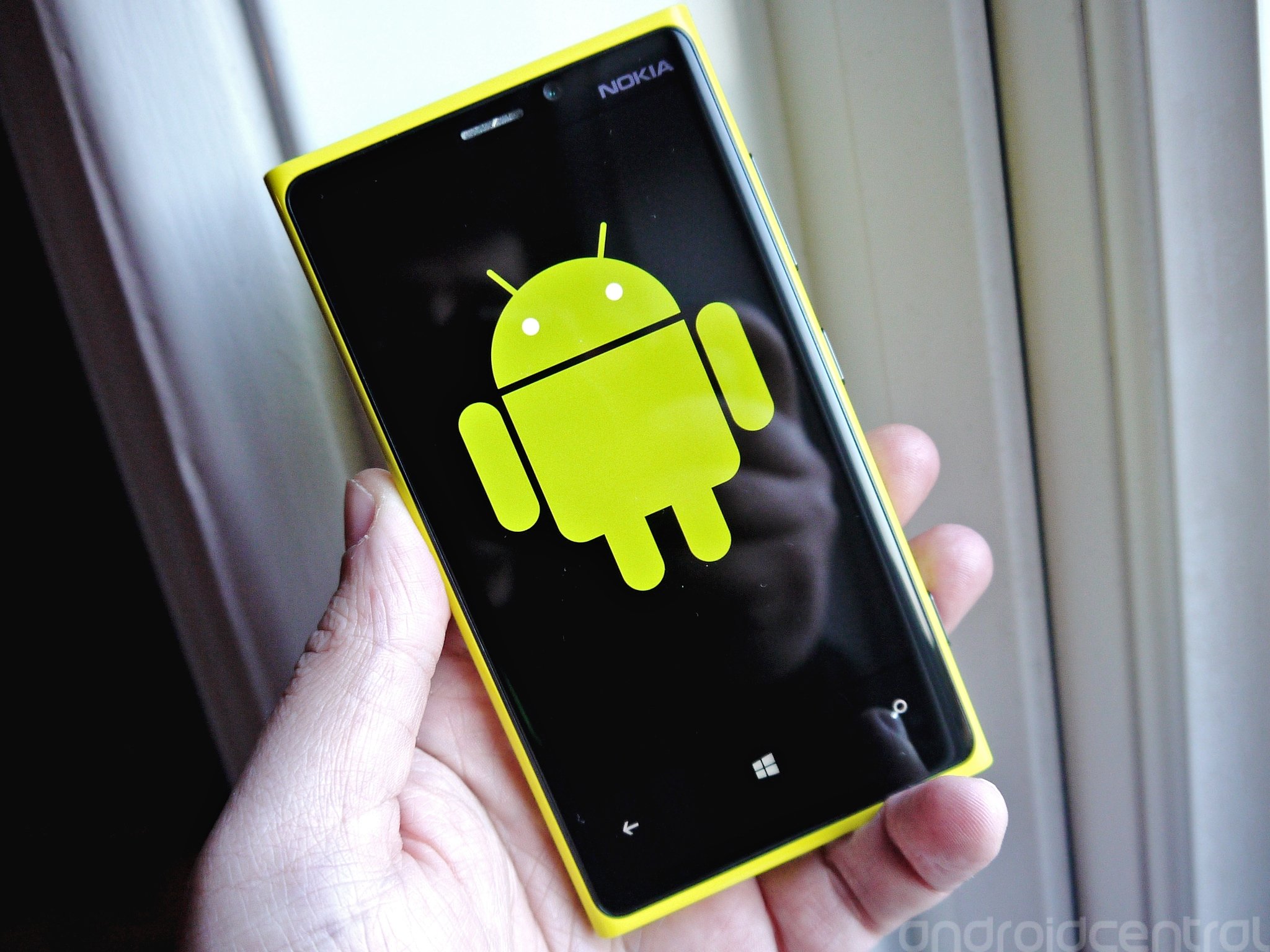
Sep 04, 2017 Run android apps on Windows phone 8/10. On your Windows Phone, go to Settings, navigate to Update & security and then to For Developers. Enable Developers Mode 2. Make sure your device is available for Discovery so that you can pair your phone to any other device using a pair code.
We’re going to focus on Android here because it’s inherently more skinnable and customizable than Apple’s mobile platform, and Microsoft is taking full advantage. You can get a similar suite of Redmond apps for iOS, but you’re still left with an experience that’s mostly Apple. Grab yourself an Android phone and we’ll get started.
Apps and services. On top of Microsoft's support for Android, Google's mobile OS also lets users select default apps for a number of functions. A person used to the Windows 10 ecosystem could use Cortana as their default assistant, Edge as their default browser, and Bing as their default search engine on their Android phone. Launcher 10 brings a dash of Windows Phone to Android. You can customize Android with home launchers, allowing you to tailor the functionality of the home screen to your desire. Some of them add special features and other improvements over Android's default home screen, bringing customizable app drawers, widgets, and other functionality.
Advertisement
Install the Microsoft launcher
Android launchers, for the uninitiated, appear when you hit the Home button—they control the icons, the wallpaper, the home screen layouts, the app drawer and more. It’s not quite the same as installing a whole new version of Android, but it can feel like it.
Microsoft has been making its own launcher called Arrow Launcher since 2015, but it’s recently been given a revamp and a rebrand to Microsoft Launcher. The new version isn’t publicly available at the time of writing, but you can get the beta installed on your Android device by following the download link from here.
Advertisement

Launch the launcher, and you get to choose some aspects of the interface, and get the option of having the Bing daily wallpaper show up on your phone too. You’ll then have to give the app some permissions so it can control everything on your phone, and sign in using your Microsoft account, if you want to easily sync all your Microsoft stuff to your newly modified Android phone.
As with Google’s stock launcher, you can swipe right from the home screen to get at a feed of weather, appointments, and news. Widgets show your frequently used apps, recent messages and photos, and favorite contacts, and all of this can be customized. You’ve also got handy widgets for jotting down notes and seeing documents on your device and in OneDrive.
Advertisement
You don’t have to go all-in with Microsoft services—you can show Google calendars instead of Outlook ones for example—but as you would expect everything works best with Microsoft’s own services. Any of the widgets can be pinned to one of your home screens for a better look.
Advertisement
Elsewhere your home screen icons and app drawer get a visual overhaul, and the persistent Google search box at the top of the screen is replaced with a persistent Bing search box—you can actually switch this to Google or Yahoo if you prefer, or disable it altogether. Tap the Launcher Settings button on the home screen to customize pretty much every aspect of the launcher, from the direction apps scroll in, to which gestures are supported across the system.
Install Microsoft’s apps
So you’ve changed the look and feel of your Android device and given it a distinctive Microsoft tinge—you then need to install all of the mobile apps Microsoft makes available for Android, which run to more than you might think.
Advertisement
There’s Outlook, Skype, Word, Excel, PowerPoint, OneNote, and Xbox for example, as well as a basic To Do app, and a lock screen manager called Next: This last one isn’t particularly Microsoft-heavy, except for pulling in Bing wallpapers, but it is developed by Microsoft and may well become more tightly integrated with the Microsoft Launcher over time.
Advertisement
If you’re wanting to Windows-ify your phone though, some apps are more important than others. Cortana can replace Google Now, Google Assistant, Samsung Bixby or whatever flavor of smart AI buddy you’ve already got, and nowadays can actually be launched with a long press of the Home button—follow the instructions inside the app to set this up.
OneDrive, meanwhile, brings everything in your Microsoft cloud storage locker over to your Android phone. If you like, it will also automatically upload your photos and videos to the cloud as well, though you’ll need to pay for more room if you start running out. Again this can be set up from inside the app when you install it.
Advertisement
Finally there’s Microsoft Edge for Android—at the time we’re writing this, the browser is only available with an invitation from Microsoft, but it should be out for everyone before too long. The big benefit for Microsoft loyalists, irrespective of the various ins and outs of the Edge vs Chrome debate, is that you can sync everything over from the desktop version of Edge, including bookmarks and browsing history.
Advertisement
With Microsoft Launcher and Microsoft’s apps all installed, and Cortana ready to go at the press of a button or the shout of a voice command, your Android phone is suddenly looking a lot more like a Windows Phone. Squint your eyes and paste a Nokia sticker on the back and it could almost be the real thing.
Connect Android to Windows 10
Since its launch, Windows 10 has made connecting to Android pretty straightforward, thanks in part to the versatility of Android and thanks in part to Microsoft making its big-name apps more cloud-focused and readily available on mobile. Using Android with a Windows PC is already simple no matter what your make or model of phone.
Advertisement
On any version of Windows 10, install Windows Phone Companion and you can swap files, photos, music, and more between your computer and your mobile—for the most part this is done by installing the apps we’ve mentioned above, but the Companion makes the process a little more straightforward.
Advertisement
With the Fall Creators Update, Windows 10 is getting even friendlier with Android phones (and iPhones), allowing you to continue your mobile web browsing on your desktop, and (eventually) pull off tricks like editing documents seamlessly across both platforms. The Fall Creators Update drops on October 17 but you can test the feature now if you’re part of the Windows Insider program.
First open up Settings on your PC, head into the Phone section, and pick Add a phone: Enter your mobile number and you’ll get a text sent to your device. Next open up Cortana on your phone, and opt to try the Continue on PC feature (it should appear as an option on the Upcoming panel). Work through the steps and not only can you continue browsing on your PC, you can see missed calls and texts on your desktop or laptop too.
Advertisement
Android Windows Phone Contacts
It’s still in its early stage but here’s something to try now: Tap any news story in the Upcoming panel in the Cortana app, then tap the Continue on PC button, which is down in the bottom right corner. Choose Continue now and as if by magic the same browser tab should appear in Microsoft Edge on your Windows 10 machine.
Advertisement
All of this is expected to get slicker over time. It might not exactly be a complete Windows Phone experience on your Android device, but you can get so close to it, it’s not hard to understand why Microsoft decided to pull the plug on developing an entire mobile OS of its own when it can just build on what Google and Apple are doing instead.
If you’re looking to run Android on your Windows PC, there’s no shortage of emulators available today. For those who are wondering, there are numerous reasons why you might want to use an Android emulator on your Windows PC. For instance, Android developers can debug their apps right onto their desktop, gamers can enjoy Android-specific games on a larger screen and the list goes on. So, now that you see the various benefits of using Android emulators, it might be tempting to try one. The problem with Android emulators is that a lot of them are finicky and tend to not work as advertised. Therefore, I tried more than a dozen emulators to bring you the 7 best Android emulators for Windows:
Note:I tried all the emulators on my HP Envy (Core i7) running Windows 10 Home and can confirm that they work as advertised. All of these apps should work on Windows 7, 8, 8.1 as well but given the wide range of Windows hardware, they may or may not work well.
1. Remix OS Player
We’ve covered Remix OS earlier, which is an operating system based on the Android x86 project. While you can install Remix OS on your Windows or Mac, there’s an even simpler way to experience Remix OS without going through the hassle of installing it. Remix OS Player is a free Android emulator for Windows based on Android 6.0 Marshmallow. Before installing Remix OS Player, please note that it doesn’t support some AMD chipsets and also requires “Virtualisation Technology” enabled in your BIOS.
The first time you run Remix OS Player, you should be greeted with a fresh-looking interface, complete with the taskbar on the bottom and a shortcut button to access all the installed apps. The Remix Central app offers you recommendations of trending apps and games you can download. It supports Google Play Store, so you can download apps and games with no extra setup.
The team acknowledges that there’s something tremendously gratifying about button mashing while gaming that sometimes you just can’t get from a touch screen and so, they have heavily optimized Remix OS Player for gaming. Specifically, you can map keyboard buttons and manage multiple games simultaneously on one screen. There are also a lot of under-the-hood improvements to improve gameplay. If you’re a developer, it still has you covered. You can manually set signal strength, network type, location, battery and lots of other things that can help you debug your Android application.
Overall, Remix OS Player is a solid Android emulator and perhaps the only emulator that runs Marshmallow, a relatively newer version of Android.
Download: (Free)
2. MEmu
MEmu is a high-performance Android emulator for Windows that is based on Android Lollipop. Unfortunately, it comes preinstalled with Android Jellybean 4.2 and upgrading to Lollipop requires downloading additional packages. It is compatible with Intel, Nvidia powered Windows PCs and unlike Remix OS Player, it is also compatible with AMD chipsets.
The first time you open it, you are greeted with an ancient 4-year old Android version, with the main menu tucked in the right-hand sidebar. It comes pre-loaded with the Google Play Store, so you can browse and download Android apps and games to your heart’s content. Also, MEmu associates itself with APK files on Windows, so you can just open the APK file from anywhere and it would automatically open and run in MEmu. Also, if you happen to discover new cool Android apps, you can have MEmu push the app right away to your phone via the USB cable.
It supports keyboard mapping, so you can assign certain keys to simulate touch in specific areas of the screen. Other than this, it supports full-screen mode, screenshot tool, a handy “kill process” tool, screen record, amongst several other features. Also, it features an interesting “operation record” tool, so you can record certain touch-screen actions and replay it anytime, thus automating tasks on-the-fly.
I really like the flawless pointer and keyboard integration in MEmu. Perhaps my only rant about it is that it ships with a really old version of Android. You can upgrade to Android 5.0 Lollipop, but that is still at least 2-years old. If you can compromise on the amazing features that Android Nougat brings to the table, MEmu is one of the most capable Android emulators I’ve tried.
Download:(Free)
3. Nox Player
Nox Player is another Android emulator for Windows, based on Android 4.4 KitKat that boasts of class-leading performance and advanced features. It ticks a lot of boxes when it comes to features, so it’s possible that some may find the interface to be a little overwhelming at first. But as you spend some time with it, you are bound to fall in love with it.
In the settings, you can change the number of CPU cores, FPS or the amount of RAM you would like to allocate to Nox. If you’ve compatibility problems with some games, you can switch between two graphic rendering modes: DirectX or OpenGL.
It comes with inbuilt support for Google Play Store and also, you can just drag and drop APKs to the Nox player to install them. There’s a “simulate touch” functionality which is just another name for keyboard mapping and it aids you in playing games. The “script record” functionality lets you record specific events on screen and replay them later. It can be especially useful when you need to automate an action on Android, that would otherwise be very monotonous to perform manually. To amaze you further, it comes with a rooted version of Android out-of-the-box. Also, the multiplayer feature lets you run multiple instances of Android at the same time.
As you can see, Nox player is an amazingly feature-rich Android emulator that is let down only by an older version of Android.
Download: (Free)
4. BlueStacks
You saw this one coming, didn’t you? After all, BlueStacks is based on Android 4.4 KitKat and has been one of the early pioneers of this whole “Android on PC” thingy. But lately, BlueStacks has become a lot bloated and the competition has quickly caught up with it. However, it is still a very capable Android emulator and I strongly feel that this list would’ve have been incomplete without mentioning BlueStacks.
It comes with the Google Play Store pre-installed, which gives you access to over 2 million Android apps and games. Installing APKs is pretty easy too. It comes with a couple of features that none of its competitors offers. The first one is the ability to live-stream to Twitch, so you can show-off you game playing skills to your followers. The second one is that you can live-stream to Facebook Live using BlueStacks TV. Other than this, it supports multitasking, much like an actual Android phone.
The free version is riddled with ads and constantly nags you to install sponsored apps. So, you can get the premium version, which brings an ad-free experience and priority support.
Android Windows Phone Icon
Download: (Free version, $3.33/month premium version)
5. AMIDuOS
Switching From Windows Phone 10 To Andr…
AMIDuOS, also called DuOS, is yet another Android emulator developed by American Megatrends, a Georgia-based company. Before installing DuOS, make sure that the “Virtualisation Technology” is enabled in BIOS and you have Microsoft Net framework 4.0 or above.
DuOS is based on Android 5.1 Lollipop but for some weird reason, there’s an option to download the Jellybean-based version too. One important thing you should know is that it does not come with the Google Play Store, but instead, ships with the Amazon App Store. Amazon’s offering is nowhere near the Play Store when it comes to the apps and games offered, but that shouldn’t be much of a problem because you can always install APKs in DuOS. In fact, you can just right click on an APK in Windows and it’ll present you with the option to install the APK directly in DuOS.
On the hardware side of things, it supports gamepads and external hardware GPS. The configuration tool lets you set the amount of RAM, frames per second and DPI manually. One feature I really liked about it is the ability to run in “root mode“. This means that you essentially have baked-in root user privileges and can run all the awesome root apps for Android. There’s no keyboard mapping feature, so playing games isn’t going to be any convenient, that is unless you attach an external gamepad.
There’s a free 30-day trial version available, but you will have to shell out $15 for the full version. The full version comes with Android 5.x Lollipop and there’s $10 lite version that comes with Android 4.2 jellybean.
Download: (30-day free trial, $15 Full version, $10 Lite version)
6. LeapDroid
LeapDroid is a powerful Android emulator that was acquired by Google last year and eventually shut-down (you can still download it from other sources). But make no mistake, despite the discontinuation, LeapDroid still manages to be one of the most robust Android emulators around.
It is based on Android 4.4 KitKat and comes with all the AOSP apps like browser, music, camera, etc. The home screen offers shortcuts to download popular game titles like Clash of Clans and Pokémon GO. But that’s not it. It comes with full support for Google Play Store, so you can get Android apps and games up and running in no time.
You can also directly install APKs from your PC if you like. Other than this, it comes with full-screen mode support, a screenshot tool and the option to choose graphics rendering mode between OpenGL or DirectX. It also supports keyboard mapping, so you can play games conveniently with keyboard shortcuts instead of having to awkwardly fiddle around with your mouse pointer. Furthermore, you can also set gesture details and simulate pinch zoom using the scroll wheel of your mouse.
If you can shove down the throat the fact that it comes with Android KitKat, LeapDroid is really impressive. Also, because it has been discontinued recently, the company behind it no longer offers any support. So, if you don’t mind searching the web on your own for squashing any bugs you might encounter, give it a try.
Download: (Free)
7. Genymotion
Genymotion has emerged as a great alternative to Android Studio’s default emulator. It is intended to be for development purposes but of course, you can use it for personal use, too. Before downloading it, make sure that you’ve enabled the “virtualization technology” in your BIOS and you have the latest version of VirtualBox installed. Also, you’ll need to sign up for an account before you can start using it.
One great benefit of using Genymotion is that it literally lets you select any Android phone to simulate and choose to install any Android version — from Android 4.4 KitKat to Android 7.0 Nougat. The free version comes with support for manually setting GPS coordinates, battery level, and camera. The premium version unlocks lots of new features like screencasting and remote controlling of Genymotion using an actual phone. It has plugins for Android Studio, IntelliJ IDEA, and Eclipse to help developers test their apps directly within the Integrated Development Environment (IDE). It doesn’t come with the Google Play Store by default, but with a little bit of setup, you can have it by manually installing GApps.
Genymotion also provides a cloud-based online emulator which you can try right within your browser, though you’d have to contact them and request for a private access.
Overall, Genymotion is the perfect Android tool for developers. You can still use it for casual gaming, although you’d be better off with other options on this list for that purpose.
Download: (Free for non-commercial use only)
Other Android Emulators For Windows
There are some more Android emulators I gave a shot but they didn’t make the cut to the above list. Some of the other Android emulators I tried are AndyOS, KoPlayer, and Droid4X. The reason I didn’t include them above is because I wasn’t able to get them to work on my machine, even after hours of troubleshooting. This does not necessarily imply that these emulators are worthless. If you feel that even after trying out the best Android emulators, none of them really suits your needs, feel free to give these emulators a try. Lastly, there’s also an official Android emulator that comes bundled with Android Studio. It is built from the ground-up mainly for development purposes, and thus may not be an ideal choice for end consumers looking to run Android apps/games on their PC. That being said, there’s no harm in trying it out!
SEE ALSO: 4 Best Android Emulators for Mac You Should Try
Run Android Apps on Windows with the Best Android Emulators
So, this was my list of some of the best Android emulators you can use to run Android apps on your Windows PC. Whether you’re a developer looking to test apps or you’re a casual user looking to play some games, you will certainly find the best emulator for your need. If you ask me personally, I’m torn between MEmu and Remix OS Player. But with so many good alternatives around, it doesn’t necessarily have to be the same for you. Which one of them is your favourite Android emulator for Windows? Chime in your two cents using the comments section below.